

News Center
NEWS CENTER
11
2019
-
11
Developed Countries Legislate to Prohibit Dirty Eggs from Listing Some Regions of China Enter the "Egg Cleaning Era"
Classification:
Developed Countries Legislate to Prohibit Dirty Eggs from Listing Some Areas of Our Country Enter "Clean Egg Era" Surprised! Developed countries have long legislated to ban dirty eggs from the market. However, there are still a few consumers in our country who think that the dirtier the eggs, the fresher they are! Eggs are an important part of our balanced diet. They are rich in protein, vitamins and minerals. Many netizens on the Internet to share the method of selecting fresh eggs, among them, some people say that the more dirty the surface of the eggs, the fresher, is that true. Why is this? Many people think that the surface of the egg is dirty, indicating that it is just

Developed Countries Ban Dirty Eggs on Market
Some parts of our country have stepped into the "egg cleaning era" first"
Surprise! Developed countries have long legislated against the listing of dirty eggs. However, there are still a few consumers in our country who think that the dirtier the eggs, the fresher they are!
Eggs are an important part of our balanced diet. They are rich in protein, vitamins and minerals. Many netizens share the method of selecting fresh eggs on the Internet. Among them, some people say that the dirtier the surface, the fresher the eggs are. Is this really the case?
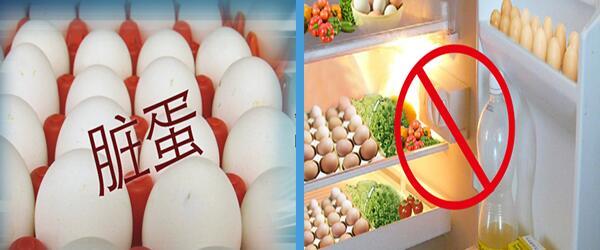
In fact, eggs with dirty surfaces are not fresh. Many people think that the surface of the egg is dirty, which means that it doesn't take long for it to be freshly baked from the chicken coop. In fact, this is a misunderstanding. Dirty eggs not only do not represent freshness, but also direct consumption of dirty eggs without sterilization treatment is a risk of bacterial infection.
Experts: dirty eggs are "invisible bacteria bomb"
According to Du Jinping, director of the Poultry Branch of the Chinese Animal Husbandry and Veterinary Association, executive director of the Hubei Animal Husbandry and Veterinary Association, and director of the Poultry Science Professional Committee, the newly produced eggs will be contaminated with chicken manure, feathers, dust and other pollutants during transportation. "Secondary pollution" causes the shells of many eggs to be unhygienic. Viruses such as Salmonella and avian influenza may also spread through the residues on the eggshell surface. If you buy such eggs and put them directly into the refrigerator, it is likely to contaminate other foods because of carrying germs, turning the refrigerator into a "poison box". Dirty eggs in the refrigerator are equivalent to an invisible bacterial bomb, which will cause harm to the health of you and your family.

How can we make eggs clean, hygienic and fresh? At present, the international popular egg safety management method is to "clean" the eggs, after cleaning the eggs we named "clean eggs". In developed countries, legislation was enacted 50 years ago to allow only "clean eggs" to be sold on the market. In 1970, the U.S. Congress reviewed and approved the "Egg Products Inspection Act", which listed eggs with dirty surfaces as "dirty eggs" and destroyed the "dirty eggs" confirmed on the market. Japan, Australia and other developed countries sold Most of the eggs are also "clean eggs".
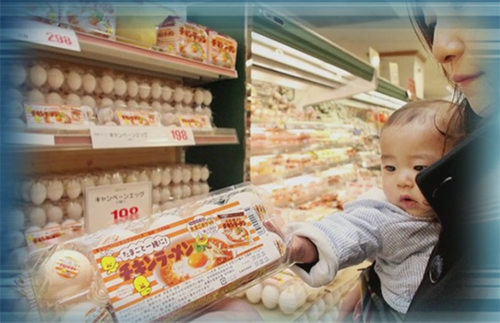
The market is all through professional machinery and equipment cleaning, ultraviolet sterilization, oil preservation and other 8 processes of eggs, such professional equipment is widely used in various farms and egg processing plants.
South Korea farmers will send their own eggs to the Agricultural Association for "cleaning" and then sell them on the market. The role of the Agricultural Association is equivalent to that of professional egg production and processing enterprises in China.
South Korea egg industry as a whole, the safety level is high, and consumers have great trust in egg consumption.
Integration: China's egg consumption into the "clean egg" era
Although there is no national standard for "cleaning eggs" in China, some provinces have promulgated and implemented local standards. In October 2009, the local standard of "Cleaning Eggs" drafted by Hubei Shendan Company was officially implemented. The "Standard" strictly limits the biological indicators such as Escherichia coli and Salmonella on the surface of eggs, and physical and chemical indicators such as heavy metals and drug residues.
A number of egg companies have launched a clean egg, leading the consumer trend and welcomed by the market.
The implementation of the local standard of "cleaning eggs" means that China's egg consumption has begun to enter the era of "cleaning eggs. A large number of experts are calling for local standards for cleaning eggs to be upgraded to national standards to promote the level of egg consumption to a higher level. It is believed that in the near future, "dirty eggs" will gradually withdraw from the stage of history.
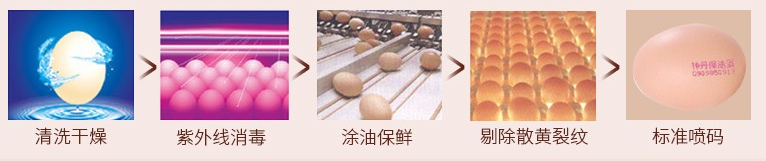
The "cleaning eggs" produced by Hubei Shendan Company has gone through eight processes:
The cleaning process washes away the dirt on the eggshell surface. Ultraviolet sterilization can kill residual bacteria. Oil preservation solves the problem that eggs are not easy to preserve after cleaning. The cleaned eggs are coated with a "coat" of fresh-keeping oil similar to egg film to prevent germs from invading again and prolong the shelf life. The machine automatically picks out scattered yellow eggs and cracked eggs that are difficult to be found by naked eyes to ensure that everyone is good; finally, the "ID card" code that can be queried on the Internet is printed on each egg body, so that each egg can be traced back, which fully guarantees the safety of eggs.
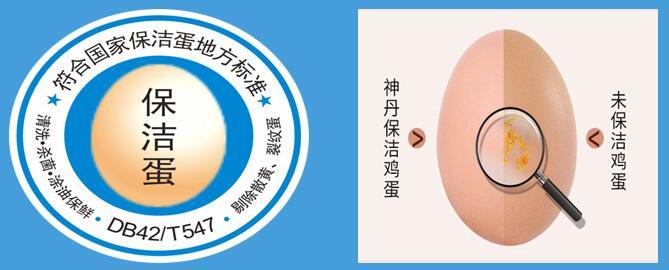
"Cleaning eggs" have special marks, with the words "in line with the national local standard DB 42/T547 for cleaning eggs" and "cleaning eggs". Please look for the "cleaning eggs" mark when buying eggs.
Developed Countries Legislate to Prohibit Dirty Eggs from Listing Some Regions of China Enter the "Egg Cleaning Era"
Next Page
Hubei Shendan Health Food Co., Ltd.
E-mail : china-shendan @ vip. 163.com
Address : No. 888 Gaoxin Avenue, East Lake New Technology Development Zone, Wuhan
Powered by www.300.cn The site supports IPV6
